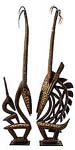
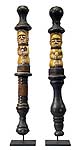
 BAKONGO Staffs 1&2 |
Couples |
Couples |
Couples |
| BAKONGO Staffs 1&2 |
Couples |
Couples |
Couples |
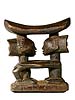 Headrests Catalog |
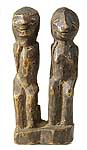 Couples |
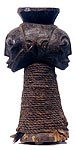
Couples |
Couple Stools |
The couples below have been sold and are left here for reference and
educational purposes.
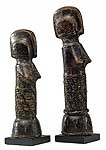 MOSSI Dolls 14-15 SOLD |
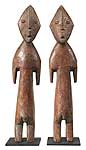 GAN Couple 1 SOLD |
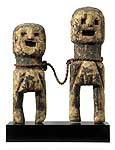
Couple 1 SOLD |
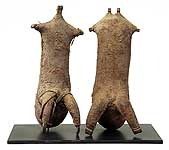 MATACOM Couple 1 SOLD |
Chi-wara SOLD |
Metal Couples SOLD |
Couples SOLD |
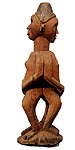
Couple 1 SOLD |
Couple 1 SOLD |
Couple 1 SOLD |
 AJA Figures SOLD |
Couple 16 SOLD |
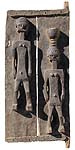
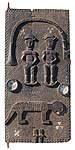
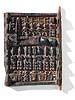
Doors SOLD |
Doors SOLD |
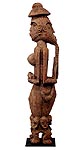
Couple 2 SOLD |
Couple 1 SOLD |
Couple 1 SOLD |
Couple 1 SOLD |
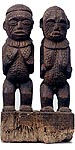
Couple 1 SOLD |
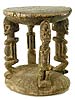 DOGON Stools SOLD |
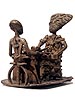
Metal Couples SOLD |
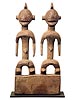 MUMUYE Couple 72 SOLD |
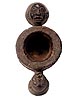
Offering Bowls SOLD |
Photographs © Hamill Gallery
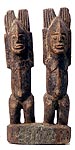
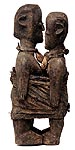
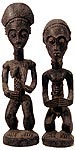
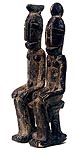
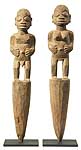
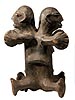
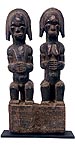
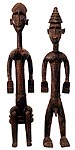
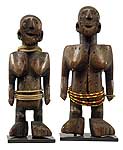
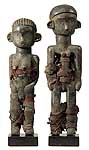
Usually representing spirits, ancestors or the primordial couple, figures like these were placed in shrines and treated with great respect. Through a wide range of style, scale, belief and function the couples depicted share a timeless, serene equality necessary to the continuity of their societies. Traditionally, most of the couples are two freestanding figures, conceived as a unit, and posed frontally, symmetrically, in formal postures and of equal size.
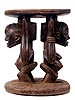
Sculpted as stools and headrests, the male and female figures serve as symbolic supports, or as handles when worked into the design of bowls. Couples also appear as decorative elements on African doors.
TRIBE |
OBJECT |