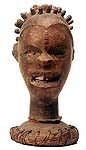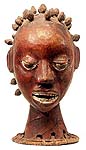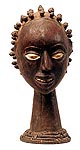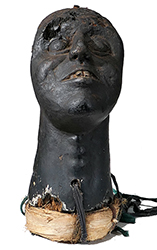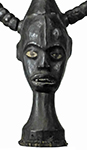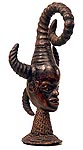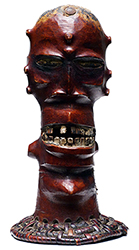
EJAGHAM
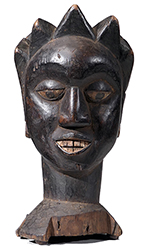
Head 18
9" high
SOLD
Provenance:
ex: David Serra
ex: Noble Endicott
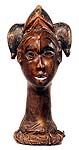
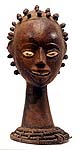
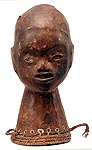
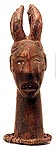
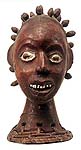
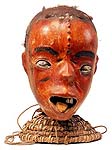
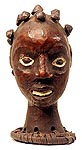
The Ejagham style heads below show no evidence of age or use and were probably made to be sold.
EJAGHAM STYLE HEAD 1 |
EJAGHAM STYLE HEAD 2 |
EJAGHAM STYLE HEAD 4 |
EJAGHAM STYLE HEAD 6 |
EJAGHAM STYLE |
EJAGHAM STYLE |
EJAGHAM STYLE |
The Ejagham heads below have been sold and are left here for reference and
educational purposes.
EJAGHAM / CROSS |
EJAGHAM STYLE |
EJAGHAM STYLE HEAD 5 |
EJAGHAM STYLE HEAD 11 |
EJAGHAM STYLE HEAD 14 |
EJAGHAM STYLE HEAD 17 |
EJAGHAM STYLE HEAD
34 |
Photographs © Hamill Gallery
EJAGHAM (EKOI), HEADS, Nigeria
In the southeastern forest region of Nigeria, the Ejagham (Ekoi) people live in a politically decentralized group of small, scattered villages with with several clans united under the leadership of a priest/chief (Ntoon). A Ntoon is responsible for the ritual activities of the community while the political functions are performed by various societies of elders and age-grade associations of young men.
The important art forms of the Ejagham people are connected with the institution of the Ntoon and with the men's and women's associations. The best known of these art forms are the large, skin-covered headdresses (crest masks), which may have one, two or even three faces, and the smaller headpieces, which may represent a head or an entire figure. These exceptional headdresses are owned by associations whose members are men or women of the same generation, but membership is often further restricted to those who have performed certain feats or are proficient in particular skills. In the past, for example, there were associations of hunters and of men who had killed leopards. The masks, which bear the same name as the society that owns them, are worn during funerals, initiations and other events. Some are startlingly naturalistic and may be portraits of known individuals; others are highly stylized.
There are two principal types of masks: helmet masks that cover the wearer's head entirely and crest masks (often referred to as headdresses) which are attached to basketry caps worn on the top of the head. Both types were made by an artist who carved the form from a single piece of wood and covered it with soft, untanned antelope skin that had been soaked in water for several days. He stretched and tacked the skin into place until it dried and stiffened.
Much of this material has been taken from a wonderful book: A History of Art in Africa published by Harry N. Abrams. The relevant chapter is Cross River by Robin Poyner.
These skin covered heads are striking for their realism and ferocity.
Some accounts suggest that they may have originated as substitutes for the
enemy skulls which were displayed by warriors at post-battle victory celebrations.
GO TO GROTESQUES EXHIBITION PAGE
GO TO A DILEMMA OF HORNS EXHIBITION PAGE
GO TO SKIN! EXHIBITION
PAGE
GO TO EJAGHAM (EKOI) JANUS HEADS PAGE
GO TO EJAGHAM (EKOI) JANUS HEADDRESSES PAGE
GO TO EJAGHAM (EKOI) ANIMAL HEADDRESSES PAGE
GO TO EJAGHAM (EKOI) HEADDRESSES ARCHIVES PAGE (ALL SOLD)
Index by |
Index by |
MJM111116